
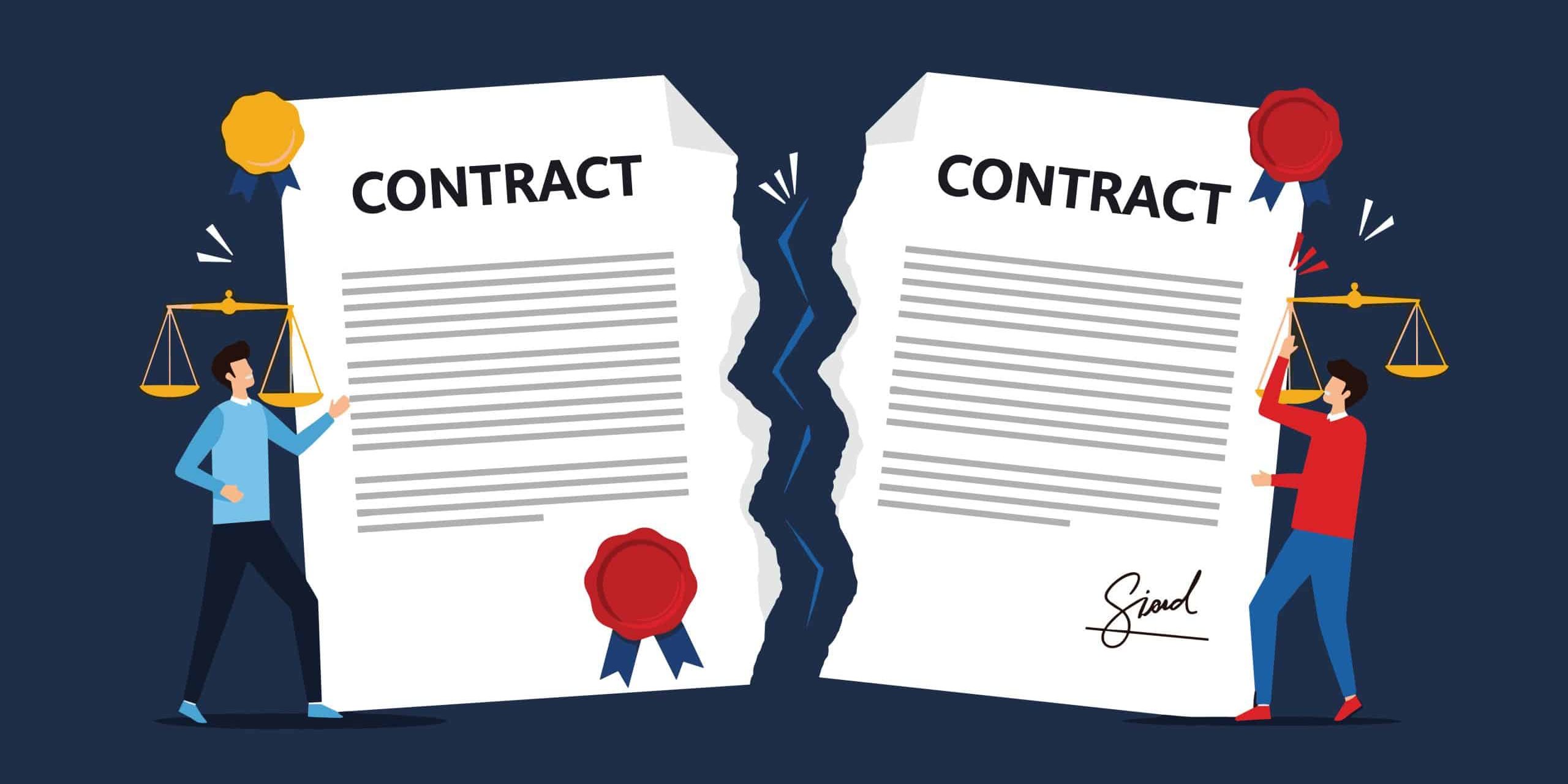
You finally shake hands on a business contract after weeks of negotiations, confident that every detail has been carefully addressed. Then the other party fails to perform the very obligation that convinced you to sign in the first place, leaving your plans, finances, and reputation hanging in the balance. This is what’s called a material breach of contract, but what does that mean, exactly? And can the agreement still be saved?
The answer could determine whether you move forward with the contract or pursue legal action to protect your business. In this post, we will review what constitutes a material breach of contract, how courts usually differentiate between minor and material breaches, and the legal remedies that might be available.
You will also learn the value of having a lawyer with experience in contract disputes when it comes to your business.
What Constitutes a Material Breach of Contract?
No two contract disputes look exactly alike, and every agreement contains its own unique obligations. Even so, courts often examine similar factors when deciding whether a breach is serious enough to demand further performance by the other party. Looking for these warning signs can help you better understand the strength of your position.
- The primary obligation was never fulfilled. The other party failed to perform one of the most important responsibilities identified in the agreement rather than just overlooking a minor detail.
- You were deprived of the contract’s expected benefit. Instead of receiving the product, service, or result you bargained for, you were left without the value that motivated you to enter the agreement.
- The problem cannot realistically be corrected. The failure is too substantial to be repaired within a reasonable time or without causing significant harm to your business.
- The conduct reflects dishonesty or intentional disregard. Evidence that the other party knowingly ignored the agreement or acted without good faith may strengthen the argument that the breach was material.
When a material breach occurs, recognizing the problem is only the first step. The next question becomes what legal remedies may be available to protect your interests.
What Remedies May Be Available After a Material Breach?
The appropriate response depends on the language of the contract, the nature of the breach, and the losses you have experienced. An experienced attorney can help evaluate which remedies best fit your circumstances.
Suspend Your Own Performance
If the other party has committed a material breach, you may no longer be required to continue fulfilling your remaining contractual obligations. This can prevent additional financial losses while the dispute is being resolved.
Terminate the Agreement
A material breach may give you the right to treat the contract as ended. Rather than remaining bound by an agreement that no longer serves its intended purpose, you may be able to walk away and pursue other business opportunities.
Recover Financial Damages
You may be entitled to compensation for damages resulting from the breach. Lost profits, extra business costs, or other quantifiable financial losses may be recoverable depending on the situation.
Request Specific Performance
Sometimes, a financial settlement will not suffice to settle the issue. Where a court deems it appropriate under the law, it can require the party that breached the contract to perform a specific contractual duty.
Pursue Other Contractual Remedies
Many commercial agreements contain provisions addressing attorney fees, dispute resolution procedures, or other remedies that become available after a significant breach. Carefully reviewing the contract is often just as important as evaluating the facts themselves.
Choosing among these remedies requires more than simply identifying a broken promise. The ability to present clear evidence and apply the law effectively can be important in developing a convincing legal argument. An experienced business/corporate attorney will thoroughly examine your agreement, consider the circumstances, and craft a strategy that will work to your best interests and in accordance with the remedies provided by Texas law.
Call Christman Attorneys for Your Legal Needs Today!
Are you looking for business and corporate law services? Christman Attorneys is your premier choice, as we were voted Best Business Law Firm in Denton County. Senior Partner Drew Christman leads the law firm’s Business/Corporate division and has been consistently voted Best Business Attorney in Denton County. With years of experience and a deep understanding of the legal landscape, our skilled team is dedicated to helping businesses navigate complex legal matters.
Consult an attorney for advice about your situation. The material on this website and in this or any blog article we publish is for informational purposes only and does not constitute legal advice. The team at Christman Attorneys believes in tailoring legal advice and solutions to your circumstances.
We have an unwavering commitment to supporting our clients at every stage of their legal matters.